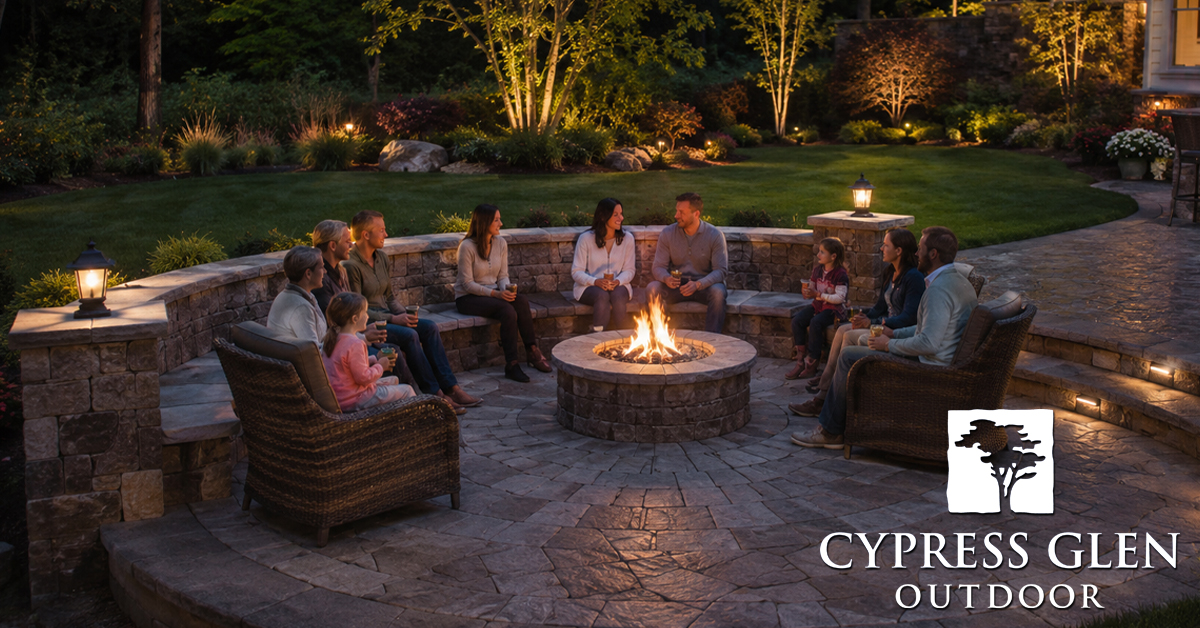
Gas vs. Wood is one of the biggest choices Maryland homeowners face when planning an outdoor fireplace or fire pit. September is a perfect time to think about it. The heat wave has finally settled down. Kids are back in school. Still, there is plenty of outdoor living left before the holidays.
Cool evenings call for warm gathering spaces. A custom fireplace or fire pit can change how your family uses the backyard. Instead of heading inside after dinner, everyone can relax outside longer.
At Cypress Glen Outdoor, we design outdoor fire features around your lifestyle. Some people want the convenience of gas. Others love the crackle and character of traditional wood. Both choices can work beautifully with the right design.
Why Outdoor Fire Features Are So Popular
Outdoor fireplaces and fire pits create instant atmosphere. People love sitting around a flame because it feels relaxed and timeless.
A fire feature also extends your outdoor season. Maryland evenings can cool quickly in September and October. However, a warm flame makes the backyard feel inviting again.
Fire features also add structure to your outdoor design. They can anchor a paver patio or define a seating area.
The Case for a Gas Fireplace or Fire Pit
Gas fire features offer convenience first. You can start the flame with a switch, remote, or button. That makes weeknight use much easier.
You don’t need to stack firewood. You also won’t have to clean up ash after every gathering. For that reason, gas works well for busy families.
Gas fire pits and fireplaces also burn cleaner. They create less smoke, which guests often appreciate.
Another advantage is control. You can adjust the flame height and heat level more easily. When the evening ends, you can turn it off quickly.
The Downsides of Gas
Gas does have some drawbacks. First, installation usually requires more planning. You may need a natural gas line or propane setup.
That can increase the project scope. Additionally, gas fire features may not produce the same rustic feeling as wood. Some homeowners miss the sound, scent, and movement of a traditional fire.
Gas flames can look beautiful with stone, glass, or lava rock. However, they feel more polished than old-fashioned.
The Case for a Wood Fireplace or Fire Pit
Wood burning fire features bring classic charm. They crackle, glow, and create that unmistakable campfire feeling.
A wood fire can feel more natural in a backyard setting. It pairs beautifully with stone patios, sitting walls, and wooded Maryland lots.
Traditional wood fire pits are often simpler to plan. They do not require gas lines or ignition systems. Because of that, they may feel more straightforward.
Wood also produces strong heat. On crisp fall evenings, that warmth feels comforting.
The Downsides of Wood
Wood fires require more work. You need to buy, store, and carry firewood. Afterward, you must clean ashes and manage leftover debris.
Smoke is another factor. Wind can push smoke toward guests or neighboring homes. Some people find that frustrating during longer gatherings.
Safety also needs extra attention. Wood fires can send sparks into the air. Therefore, proper placement and materials matter.
Before choosing wood, review your property layout and community guidelines. This helps you avoid placement issues and unwanted surprises.
Gas vs. Wood for Entertaining
When comparing Gas vs. Wood for entertaining, think about how you host. Do you want fast, simple, and clean? Gas may be the better fit.
Maybe you enjoy building a fire and tending it throughout the evening. In that case, wood might suit your style. It adds ritual and character to gatherings.
For casual weeknight use, gas wins on convenience. During long fall nights, wood offers a more traditional experience. Neither option is wrong. The right choice depends on your lifestyle.
Gas vs. Wood for Maintenance
Maintenance is another big difference. Gas fire features require less daily cleanup.
Wood fire features need more regular attention. Ashes must be removed safely.
However, some homeowners do not mind the extra work. They view it as part of the experience.
Gas vs. Wood for Design
Design matters as much as function. Gas fireplaces often pair well with modern patios and sleek outdoor kitchens. They can include fire glass, clean lines, and built-in seating.
Wood fire features lean more rustic. They work well with natural stone and curved sitting walls. A wood fireplace can feel like a timeless backyard centerpiece.
Cypress Glen Outdoor can design either option around your home. We consider patio size, seating, traffic flow, and surrounding features. Then, we build a layout that feels intentional.
Which Option Is Better for Your Backyard?
The best choice depends on your priorities. Gas makes sense when you want convenience, cleaner operation, and easy control. Wood makes sense when you value tradition, strong ambiance, and a classic fire experience.
Also, think about how often you will use it. A gas fire pit may get used more often because it starts quickly. Meanwhile, a wood fireplace may feel more special for weekend gatherings.
Budget, layout, and property conditions also matter. Our team can walk you through those details before construction begins.
Build a Complete Outdoor Living Space
An outdoor fireplace or fire pit should feel connected to the rest of your backyard. Cypress Glen Outdoor can design the entire space around how you entertain. Your project may include a paver patio, custom deck, or screened porch.
We can also add an outdoor kitchen, built-in bar, pergola, pavilion, or sitting wall. Walkways, retaining walls, and custom hardscaping can complete the layout. Together, these features create a backyard that works at the holidays and beyond.
You do not have to settle for a Plain Jane patio. We will design something that reflects your personality, interests, and lifestyle. Whether you choose gas or wood, your fire feature should feel like it belongs.
Let Cypress Glen Outdoor build the backyard you’ve been dreaming of.